Short animated series — ranging from 1 to 3 minutes per episode — have become one of the most profitable formats in mobile entertainment. Not because they have massive YouTube audiences, but because they are monetized differently: viewers pay for the next episode, to unlock the storyline, or for early access. This isn’t a catalog subscription or mid-roll ads. It’s a transactional model where every episode is a point of sale.
In this article, we’ll break down how microtransaction-based monetization works for short series, which production decisions make it profitable, and what to consider when planning distribution. This experience is based on working with mobile entertainment platforms, short animated formats, and international content distribution.
How the Microtransaction Model Works
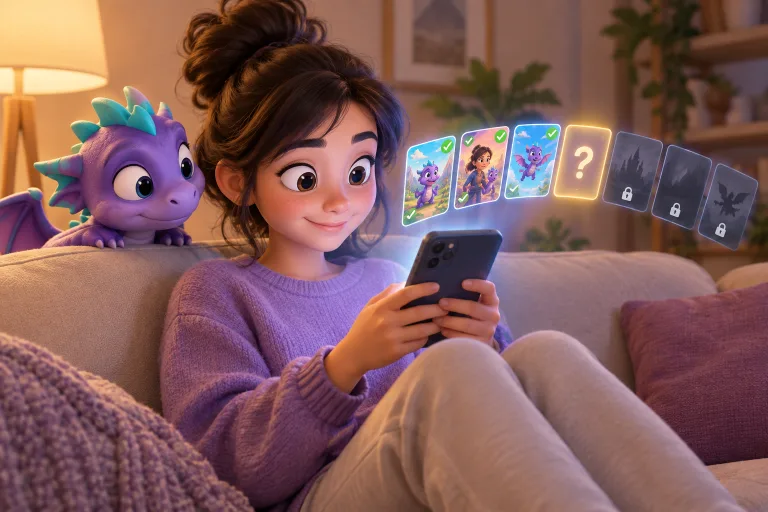
Unlike subscription streaming, where users pay for access to an entire catalog, the microtransaction model sells content in pieces. The viewer watches the first few episodes for free, then hits a paywall: pay with coins, crystals, or real money to unlock the next episode.
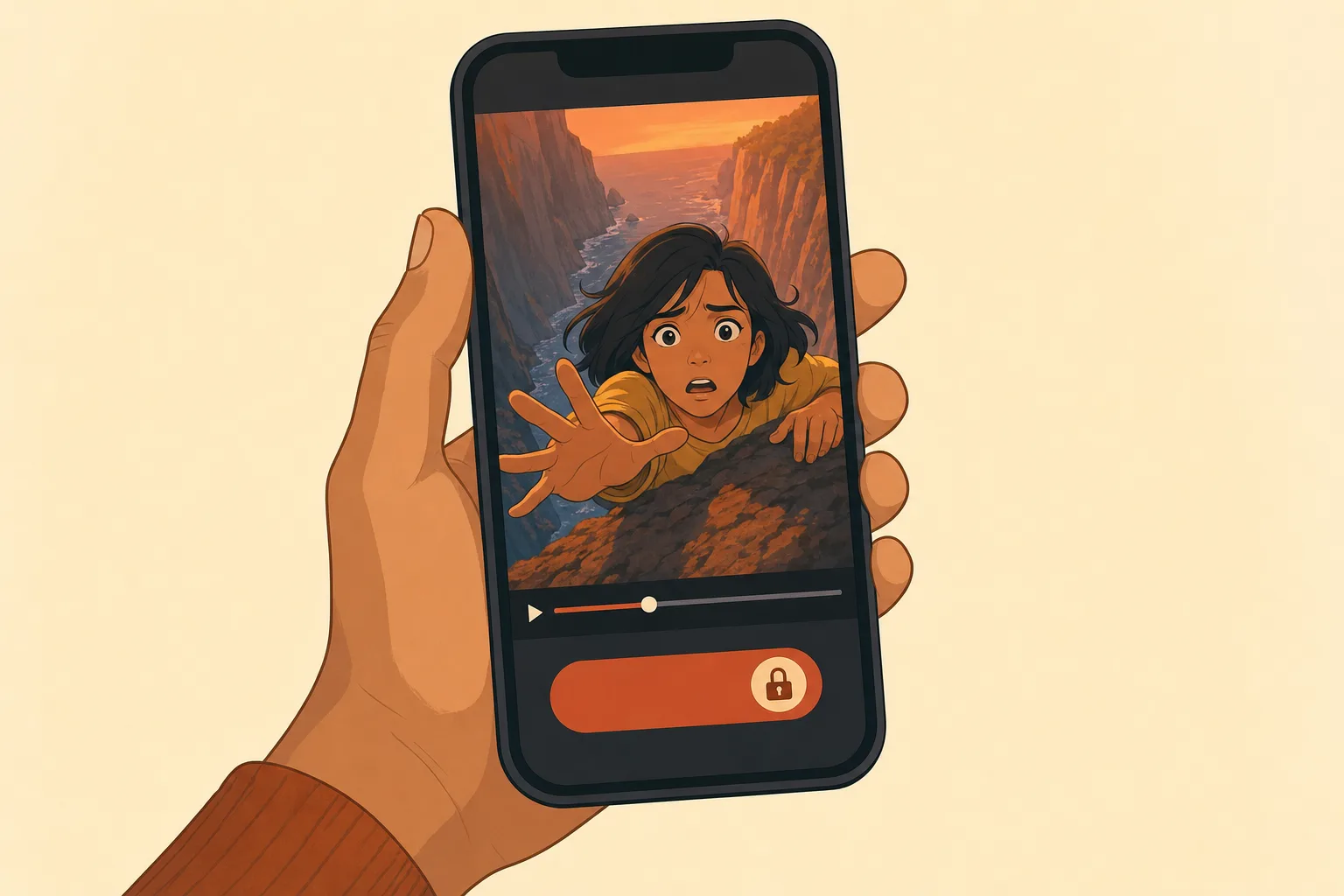
This works because a short series creates a tight narrative loop. An episode lasts 90 seconds, ends on a cliffhanger, and the viewer makes the payment decision at the moment of maximum emotional engagement. It’s not the same as deciding whether to pay $15 a month for a platform subscription. The decision is small, impulsive, and repeatable.
According to Pocket Entertainment, upon returning to short series formats with their product Pocket Saga, the company focused specifically on bite-sized episodes with thousands of series on the platform. The monetization model is a combination of subscription and transactional purchases. This isn’t an experiment, but a proven business model: short episodes, dense release schedules, micro-payments.
Why Animation Fits the Transactional Model Better Than Live-Action
Live-action short series — dramas, romance, thrillers — have already proven the model works. But animation has a structural advantage: the cost per episode is lower, and scaling is faster.
Pocket Entertainment previously invested in the AI-assisted content production studio Blaze to help creators produce comics faster. The logic is the same: animation and assisted production technology change the cost equation. Live-action requires a constant stream of actors, locations, and film crews. An animation pipeline — especially with reusable assets, backgrounds, and rigs — allows for more stable and cheaper episode production.
This is critical for the microtransaction model. If the viewer pays for each episode, the cost of producing one episode must be low enough to maintain a margin when the unlock price is equivalent to $0.10–$0.50. Animation makes this possible.
Series Structure as a Sales Funnel
A successful short series in the microtransaction model isn’t just a collection of episodes. It’s a funnel where every element is designed for a specific goal.
The first 3–5 episodes are free. Their job is to hook the viewer, introduce the character, and establish the conflict. There should be no long exposition here. The character is in trouble from the first second, with a clear goal and a recognizable antagonist.
Episodes 6–10 are the first monetization point. The viewer is already engaged, and the cliffhanger of the fifth episode is strong enough to create a desire to see what happens next. The unlock price here is minimal — the first paid step should be easy.
From there, the pace accelerates. Episodes become shorter or denser, and turning points happen more frequently. Every episode ends in a way that makes it psychologically difficult not to watch the next one.
In practice, this means the script shouldn’t be written like a traditional series, but as a cascade of hooks. Every 60–90 seconds brings new information, a new twist, or a new stake for the character.
Release Pace and Paying Viewer Retention
In the microtransaction model, release pace directly impacts revenue. If a viewer finishes the available episodes and there are no new ones, they leave. Bringing them back is difficult and expensive.
The optimal pace is 3–5 episodes per week during the active phase of the series. This is enough to maintain the viewing habit and enough to prevent the production team from burning out. Some platforms release 10 episodes a day, but this requires a large backlog of finished content and a rigid pipeline.
For an animation studio, this means you need to produce not just one episode, but a series of 30–50 episodes before launch. The first batch is 10–15 episodes for the free section and the first monetization points. The rest is in production, with a 2–3 week buffer.
Genres That Work Best
Not every genre monetizes equally well through microtransactions. Based on platform experience and viewing analytics, several directions consistently show high conversion rates to paying viewers.
Romance and romantic fantasy are the leaders. Emotional engagement is high, and the viewer wants to see how the relationship story ends. Cliffhangers work naturally here: a confession is interrupted, a rival appears, a misunderstanding escalates.
Fantasy and the supernatural are the second group. Magic systems, origin mysteries, power hierarchies — all of this creates curiosity that is easy to monetize. The viewer wants to discover the hero’s secret or the power of an artifact.
Thrillers and mysteries are the third. Suspense works well here: who is the killer, what’s in the locked cabinet, what will happen in a minute.
Pocket Saga offers exactly these categories: fantasy, romance, romantic fantasy, supernatural, action, mystery, and thriller. This isn’t a random set, but the genres that best support the transactional model.
Episode Design: What Works on a Small Screen
A short animated episode for mobile viewing requires different visual decisions than traditional animation. The screen is small, attention is fragmented, and viewing often happens on public transport or in line.
Characters must be recognizable by their silhouettes. If the viewer can’t identify the hero in the first two seconds, they won’t engage. Faces should be large, emotions exaggerated, and the palette contrasting. Backgrounds are simplified but not sterile — enough detail to create atmosphere without distracting.
The editing pace is faster than in long-form animation. Shot changes every 5–8 seconds. Long panoramic sweeps don’t work — the viewer won’t wait. Every shot carries new information or a new emotion.
Sound is half the experience. Musical cues, sound effects, short lines. Dialogue is concise: one or two sentences per scene. Long monologues kill the pace.
Monetization: Beyond Episode Unlocks
Unlocking the next episode is the core mechanic, but not the only one. Platforms are experimenting with several models in parallel.
Early access — the viewer can watch the next episode before everyone else by paying. This works for series with an active community where discussion is part of the experience.
In-app subscription — the user pays a fixed weekly or monthly fee and gets access to all episodes without per-piece payments. This stabilizes revenue but lowers the average revenue from the most engaged viewer, who pays more in a transactional model.
Ads — watching a video ad unlocks one episode. This works for a free audience that isn’t ready to pay but is willing to spend time. Ads complement rather than replace microtransactions.
Network Entertainment, having launched the Network Verticals division for vertical video, noted that subscription and transactional revenue are already growing exponentially, and as the business develops, ads, franchises, and other models will be added. This confirms that microtransactions aren’t a niche mechanism, but a foundation upon which other revenue streams are layered.
International Distribution: Same Episodes, Different Markets
One of the main advantages of the short animated format is the ease of localization. An episode lasts 90 seconds, there is little dialogue, and the context is visual. Translating and dubbing a 50-episode series into five languages takes weeks, not months.
But localization isn’t just translation. Genre preferences vary. In Southeast Asia, romance and fantasy show high conversion. In Latin America — drama and thriller. In India — supernatural and action. This doesn’t mean you need to produce different content for each market. It’s enough to adapt the release order, promo accents, and localized creatives.
The key principle: one series, multiple markets, an adapted launch strategy. Produce once, distribute everywhere.
What to Track: Metrics for the Transactional Model
In a subscription model, the main metric is churn. In an ad-supported model, it’s views and CPM. In a microtransaction model, it’s conversion to the first purchase and average revenue per paying user.
Conversion to first purchase — the percentage of viewers who make at least one unlock after the free episodes. A good rate is 8–15%. Below 5% means there’s a problem with the hook or the monetization point.
Average Revenue Per Paying User (ARPPU) — how much the viewer spends over the lifetime of the series. With an unlock price of $0.20 and 30 unlocks, that’s $6. If the series has 80 episodes and the viewer watches half, it’s $8. This is comparable to a monthly subscription, but without the commitment.
Share of paying users — what percentage of the active audience makes at least one purchase. 10–20% is a healthy range for short vertical series.
Production Decisions That Make the Model Profitable
The microtransaction model only works with a low cost per episode. Several production decisions help keep the cost at the required level.
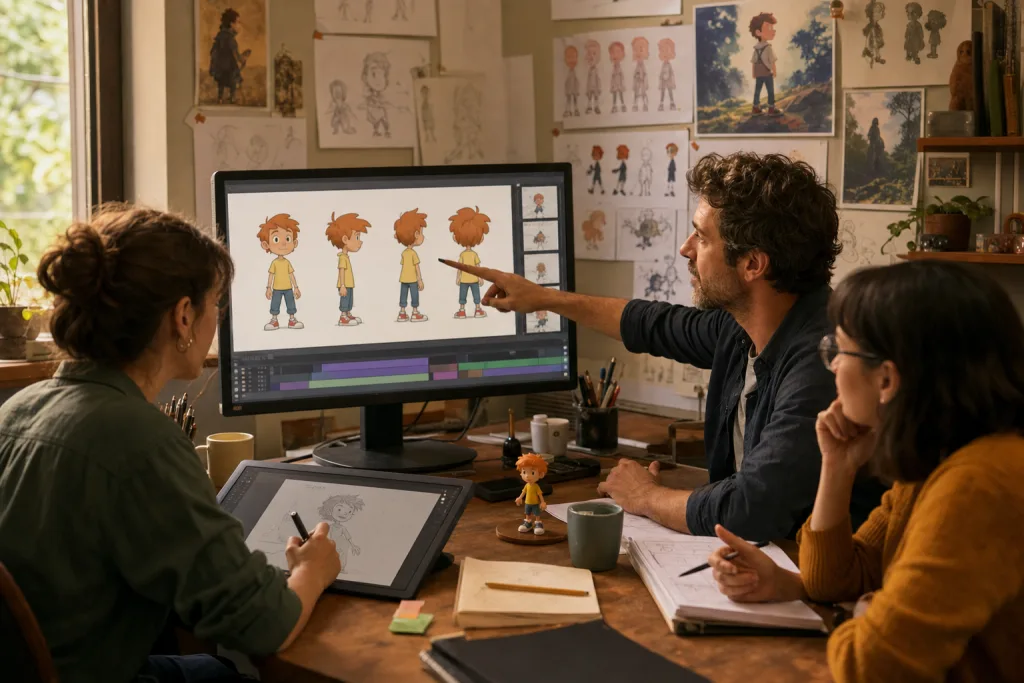
Reusable assets. Libraries of characters, backgrounds, props, and effects. One character rig — dozens of episodes. New locations are modifications of existing backgrounds, not built from scratch.
Modular scriptwriting. Episodes are built from repeating structural blocks: setup, escalation, cliffhanger. This isn’t a template in a bad sense — it’s a framework that allows for variability within it.
Parallel production. Multiple episodes in the works simultaneously at different stages: storyboarding, animatic, animation, compositing. A pipeline, not piecemeal production.
A team capable of consistent releases. For short series, the predictability of the release schedule is more important than the complexity of each episode. A simple episode released on time is better than a complex one delayed by a week.
Checklist: Is Your Series Ready for the Microtransaction Model?
- The first 3–5 episodes are free and end with a strong cliffhanger
- The cost per episode allows for a margin at an unlock price of $0.10–$0.50
- A backlog of 2–3 weeks of finished episodes before launch
- Release pace of at least 3 episodes per week during the active phase
- The genre supports emotional engagement: romance, fantasy, thriller, mystery
- Localized versions are planned during production, not after
- Analytics track conversion to first purchase and ARPPU, not just views
FAQ
How many episodes are needed to launch a microtransaction series?
A minimum of 15–20 episodes: 5 free, 10–15 for the first wave of monetization. Optimally, you should have 30–50 episodes in the backlog before launch to maintain a release pace of 3–5 episodes per week for the first month.
What unlock price works best?
It depends on the market and platform. In emerging mobile markets, it’s the equivalent of $0.10–$0.20. In developed markets, $0.30–$0.50. The key is that the first purchase should be easy. After that, the viewer is already used to paying.
Can microtransactions be combined with a subscription?
Yes, and most platforms do exactly that. A subscription is for those who want to watch without paying per episode. Microtransactions are for the most engaged users who are willing to pay for early access or to find out what happens next immediately.
Animation or live-action — which is more profitable for microtransactions?
Animation is more profitable when scaling. Reusable assets, modular scripts, and parallel production lower the cost per episode. Live-action requires a constant influx of new actors and locations, which is more expensive at the same release pace.
Which markets are best for launching short series?
Southeast Asia, India, Latin America — markets with high mobile penetration, a habit of micro-payments, and a demand for short entertainment formats. Developed markets also work, but require different price points and genre accents.