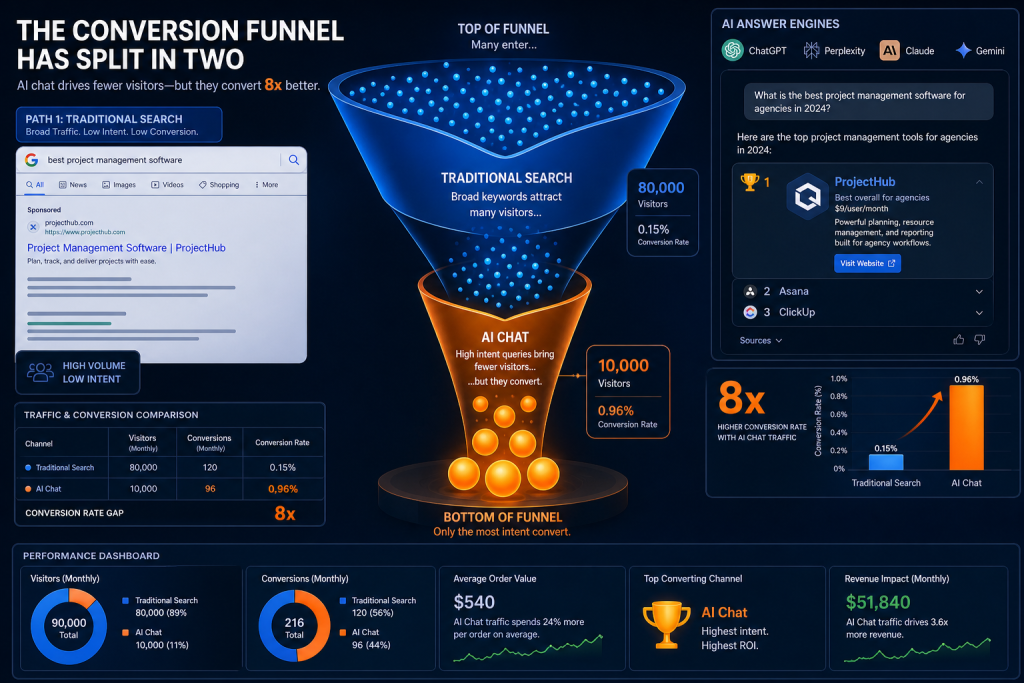
Data from 2026 reveals a paradox: although AI answer engines (ChatGPT, Perplexity, Gemini) generate significantly fewer clicks than classic Google, every visitor coming from there is worth on average 8 times more in terms of conversion. The reason is simple — the LLM has already filtered out the informational noise and sends you a “warm” referral. This fundamentally changes the economics of content production: editorial teams no longer need to chase top-of-funnel reach in AI search. They need to close decision-stage queries with materials that the model considers the best answer at the moment of the buyer’s decision.
Why LLM Referrals Convert 8x Better
Comparing AI traffic to broad organic search is a survivorship bias. By the time an LLM sends a click to your site, the tool has already done the research for the user. The visitor arrives not at the problem awareness stage, but at the solution validation stage.
In classic SEO, the funnel looks like this: a user searches for “what are DCB payments” → reads 5 articles → a month later searches for “best DCB aggregators for Africa” → converts. In AI search, ChatGPT or Perplexity has already synthesized the answer to the first query internally, and only provides an external link when the user asks “which service is best for DCB integration in Malawi”. By clicking the link, the user is already ready to act.
This is exactly why 16% of buyers who discover brands through AI tools show conversion rates comparable to the bottom of the classic funnel. This is not top-of-funnel discovery, but a pre-qualified referral.
Content Strategy Shift: From Reach to Qualification
Most content teams still optimize long-form materials for informational queries, hoping that AI engines will cite them. But informational queries are a black hole for clicks: the LLM generates the answer itself, using your data, but sends no traffic.
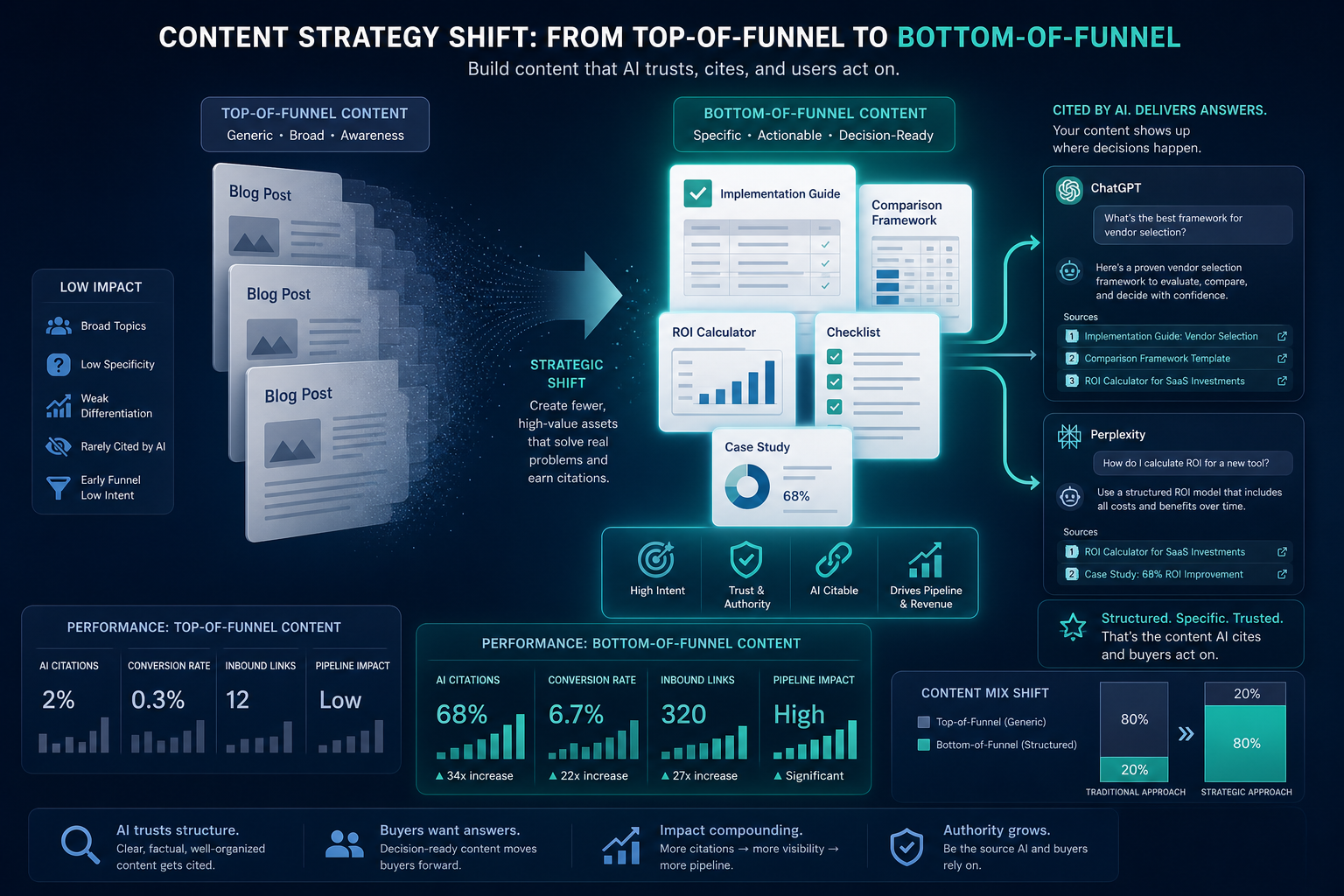
The strategic shift dictated by the 8x conversion involves reallocating the editorial budget:
- Reduce the production of broad informational guides (if their only goal is to get a citation in an AI answer without a click).
- Increase the share of bottom-of-funnel (BOF) materials: comparisons, specific scenario reviews, technical specs, case studies with measurable results.
- Create content that an LLM cannot synthesize itself: primary data, expert assessments, integration schemas.
How LLMs Choose Sources for BOF Queries
Citation analysis shows that AI engines look for specific signals at the decision stage:
Data Freshness
91% of the content cited by AI engines is fresh or recently updated pages. LLMs do not recommend outdated materials. If your article on payment API integration was written in 2024, and a competitor updated theirs in 2026, the citation goes to them.
Structured Comparisons
When a user asks “Compare Contentful and Strapi for multilingual content”, the LLM looks for comparison tables, clear lists of pros and cons, and specific technical metrics. Vague paragraphs are not cited.
Omnichannel Presence
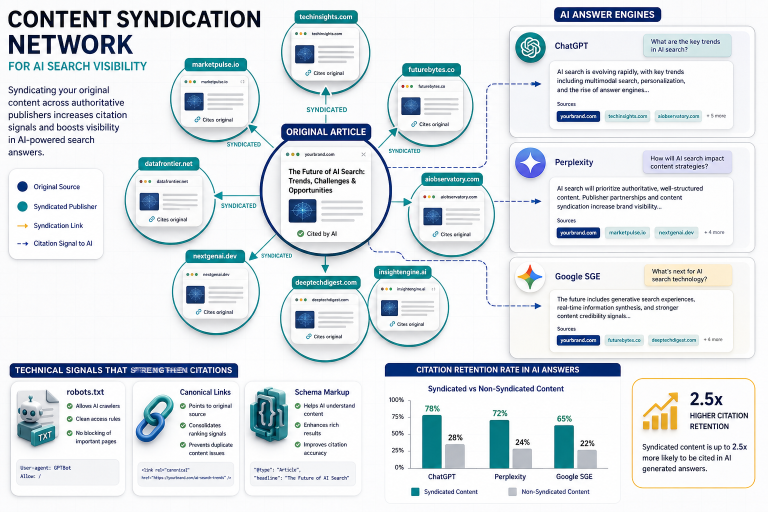
Brands publishing content across multiple channels (blog + LinkedIn + industry media + GitHub) get more citations. LLMs perceive an omnichannel presence as an authority signal.
Practical Framework: Restructuring the Editorial Calendar
1. Audit Existing Portfolio by Intent Stages
Divide all articles into three buckets: TOF (problem awareness), MOF (evaluating options), BOF (selection and validation). Use an AI audit: upload a list of URLs to an LLM with the prompt “Classify each URL by the buyer funnel stage and assess the likelihood of getting a click from AI search”.
2. Identify Decision-Stage Queries
Gather the queries users ask ChatGPT and Perplexity at the selection stage. These are queries in the format:
- “Best [tool] for [specific scenario]”
- “How [company] solves [specific problem]”
- “Comparison of [product A] and [product B] for [use case]”
- “Alternatives to [product] with [feature]”
3. BOF Content Production with an AI Pipeline
For each decision-stage query, create a material that the LLM will consider the best answer:
- Structure with tables — AI engines prefer extracting data from tables.
- Include proof points — specific numbers, metrics, case study results.
- Add differentiation — clearly explain why your solution differs from alternatives.
- Update quarterly — the freshness signal is critical for citability.
Measurement: Which Metrics to Actually Track
When 90% of AI queries are informational and generate no clicks, traditional traffic metrics lose their meaning. Content teams need a different set:
Share of AI Referral Traffic in BOF Materials
If your BOF articles get disproportionately more traffic from ChatGPT/Perplexity than TOF materials — the strategy is working. If AI traffic is distributed evenly — you are not optimized for the decision stage.
Conversion of AI Referrals vs. Organic
Set up a separate analytics segment for traffic with UTM tags or referrers from AI platforms. Compare the conversion to regular organic traffic. The expected pattern: AI traffic converts 5–10x better, but the volume is 10–20x lower.
No-Click Citation Frequency
Use LLM-SEO tools to track brand mentions in AI answers. An increase in mentions without an increase in clicks means the LLM uses you as a source but doesn’t recommend clicking through — this is a signal that your content is not structured enough for the BOF stage.
Risks and Limitations of the 8x Premium
The eightfold conversion gap is not a guarantee, but a median. It’s important to understand the limitations:
- Bottom of the funnel: AI referrals are predominantly BOF traffic. Comparing the conversion of a pre-qualified visitor to all organic traffic is not an apples-to-apples comparison.
- Niche dependency: In B2B and technical niches, the gap can reach 10–12x, in consumer ones — 3–4x.
- Volume: Even with an 8x conversion, the absolute volume of LLM traffic is still small. It’s not worth completely abandoning classic SEO.
How to Integrate an AI-BOF Strategy into Content Operations
Implementing a BOF focus for AI search requires changes in the editorial workflow:
Prompt System for BOF Materials
Create a system prompt that generates the structure of a BOF article optimized for AI citability:
“Generate an article structure for the query [decision-stage query]. Include: a comparison table of alternatives, 3 proof points with metrics, an FAQ block with specific technical answers, a ‘limitations and risks’ section. Format — as structured as possible, with clear H2/H3 headings”.
Update Cycle
BOF content is not “write and forget”. Assign a responsible editor for quarterly updates: checking the relevance of numbers, adding new cases, updating dates. Use AI to automatically monitor obsolescence: prompt “Analyze this article and highlight facts that may become outdated within 6 months”.
Coordination with Product Marketing
BOF materials for AI search require data that the content team doesn’t have: product metrics, client case studies, technical specs. Establish a synchronization process with product marketing — monthly interviews with PMs, access to internal analytics, alignment on proof points.
Checklist: Content Audit for BOF Optimization in AI Search
- Classify all articles by funnel stages (TOF/MOF/BOF) using an AI portfolio audit.
- Gather 20–30 decision-stage queries from Perplexity and ChatGPT relevant to your product.
- For each BOF query, check: do you have a material that the LLM can cite as the best answer.
- Ensure that BOF articles have comparison tables, specific metrics, and proof points.
- Set up a separate analytics segment for AI referral traffic and track conversions.
- Implement a quarterly update cycle for the top 10 BOF materials.
Practice: From Visibility to Pipeline
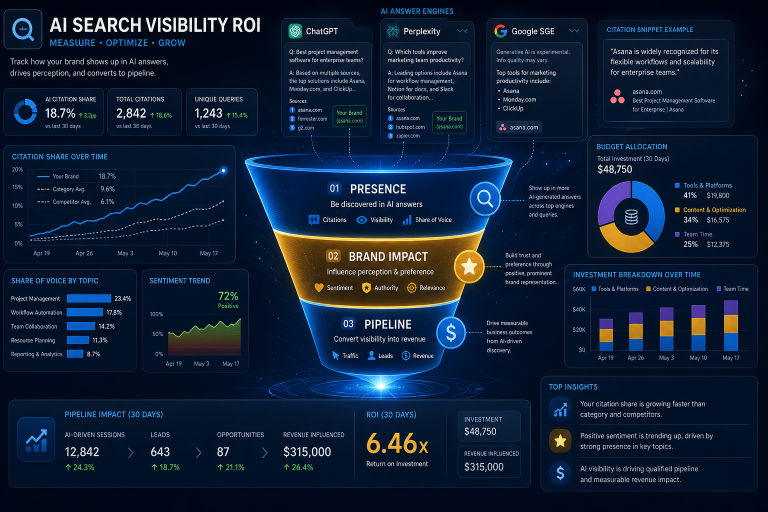
2026 case studies show that companies focusing their content strategy on AI citability for decision-stage queries achieve measurable results. One fintech startup grew from 4% to 53% AI visibility, increasing AI-sourced leads by 360%. The key decision was abandoning the production of broad educational materials and focusing on content that the LLM cites when the user is already ready to choose a provider.
This doesn’t mean educational content isn’t needed. But its role is changing — it builds brand signals and expertise, which the LLM considers when choosing a source for a BOF citation. Educational content becomes the foundation, while BOF materials act as the conversion mechanism.
What to Do Right Now
- Conduct an intent audit of the top 50 blog pages. How many of them close decision-stage queries?
- Run a prompt test: enter 10 BOF queries into ChatGPT and Perplexity. Do they cite your materials? If not — who gets the citation and why?
- Reallocate 30% of the editorial calendar to BOF materials with proof points, tables, and updatable data.
- Set up AI referral tracking in analytics. Measure conversion, not volume.
- Create a prompt system for quarterly updates of BOF content.
FAQ
Why does LLM traffic convert better than regular organic?
Because by the time of the click, the LLM has already done the research for the user. The visitor arrives at the solution validation stage, not the problem awareness stage. This is equivalent to a warm referral, not top-of-funnel traffic.
Should I abandon classic SEO for AI optimization?
No. AI traffic is still low in volume, even with high conversion. The strategy is reallocation: reduce the production of commodity TOF content and increase the share of BOF materials optimized for AI citability.
Which content formats do LLMs cite most often at the decision stage?
Structured comparisons in tables, materials with specific proof points and metrics, technical specs, case studies with measurable results. LLMs prefer extracting data from clearly structured blocks rather than vague paragraphs.
How to measure AI traffic conversion if 90% of queries generate no clicks?
Set up a separate analytics segment for referrers from AI platforms (ChatGPT, Perplexity, Gemini). Compare the conversion of this segment to regular organic traffic. Additionally, track brand mentions in AI answers through LLM-SEO tools.
How often should BOF content for AI search be updated?
Quarterly. 91% of the content cited by AI engines is fresh or recently updated pages. Use AI prompts to monitor fact obsolescence and automatically remind you of the need to update.