
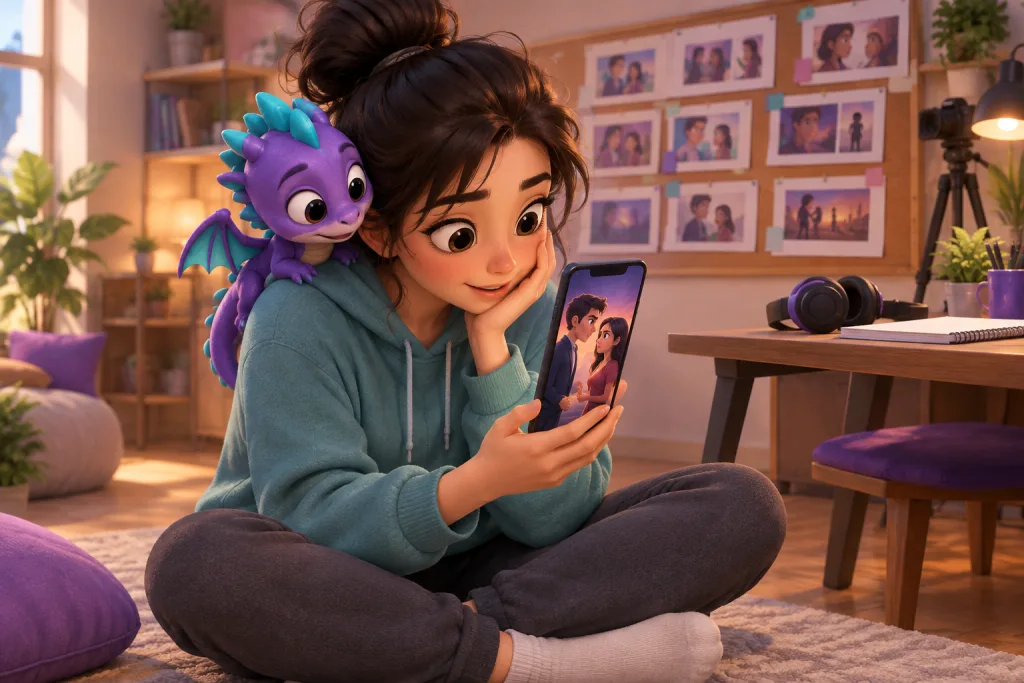
Vertical micro-dramas — series with one-to-three-minute episodes shot for portrait-mode smartphone viewing — are no longer a niche experiment. In China, Thailand, India, and across Southeast Asia, this format generates hundreds of millions of views and steady revenue through microtransactions and subscriptions. For content teams working in mobile entertainment, international distribution, and localization, this isn’t just a trend — it’s a working model of how a short format turns into a business.
The key takeaway is simple: micro-dramas work not because they are short, but because they are built around mobile behavior. Users watch on the go, between tasks, in lines, or on transit. An episode must hook them in the first five seconds, hold them with an emotional hook, and end on a cliffhanger that forces them to tap “next.” This isn’t a condensed feature-length series — it’s a distinct storytelling language, and mastering it determines who makes money and who just burns through a production budget.
What Are Vertical Micro-Dramas and Why Do They Work
A micro-drama is a series where each episode lasts 60 to 180 seconds. The script is compressed into a single scene with a single twist. Characters are introduced through action, not exposition. The plot follows the “one conflict — one episode” principle, but with an overarching arc stretching across dozens or hundreds of episodes.
The format works for three reasons. First is attention. A mobile viewer won’t wait three episodes for character development. They want conflict now, a resolution in a minute, and a new question at the end. Second is re-watching. A short episode can be re-watched, and many viewers do this to relive an emotional moment. Third is microtransactions. The first episodes are often free, while the continuation is unlocked for a small fee. The low price per episode is multiplied by frequency — resulting in revenue comparable to traditional subscriptions.
Thailand: When a Telecom Becomes a Content Distributor
One of the most telling examples is the Thai market. Recently, COL Group and CP Group announced a partnership aimed at transforming the Thai short-series market. COL Group brings global experience in short-series production and an IP library, while CP Group contributes a deep understanding of local consumer habits and a network of creators. The consumer-facing part of the deal is the launch of FlareFlow Mini, a dedicated micro-drama section within the TATANG platform by TrueID, operated by CP Group’s telecom arm, True Corporation.
This isn’t just another streaming platform. It’s an example of a telecom operator becoming a content distribution channel. The telecom already has a subscriber base, payment infrastructure, and user behavior data. By adding vertical micro-dramas to its product, it gains a new way to monetize its existing audience, while the content team gets access to viewers without having to build its own platform from scratch.
For content teams looking to enter Asian markets, the conclusion is obvious: distribution through telecom partners can be more effective than independent app store publishing. The telecom provides the payment mechanism, a localized interface, and often bundling with mobile plans, which lowers the barrier for the first payment.
India: From Service Animation to Original IP
India is the second key example. For a long time, Indian studios worked as service contractors for global projects. But now, as discussed at the Animation & More Summit 2026, the content economy is shifting: traditional TV advertising is plateauing, while digital, streaming, and AVOD models are gaining traction. Indian studios are starting to create original IP for mobile platforms.
Short series and entertainment apps are one of the fastest-growing segments. As GamingonPhone notes, short dramas, vertical series, and entertainment products increasingly align with how global users consume content today: fast attention, emotional hooks, re-watching, and storytelling tailored for mobile consumption. For Indian publishers, this creates an opportunity to turn production strengths into growth driven by overseas audiences.
The practical takeaway: Indian studios can develop a game that reaches users in the US, a utility app that acquires users in Europe, or a short series that tests an audience in Southeast Asia or among the Indian diaspora. The footprint is local, the opportunity is global.
The Format: Why Three Minutes Works Better Than Thirty
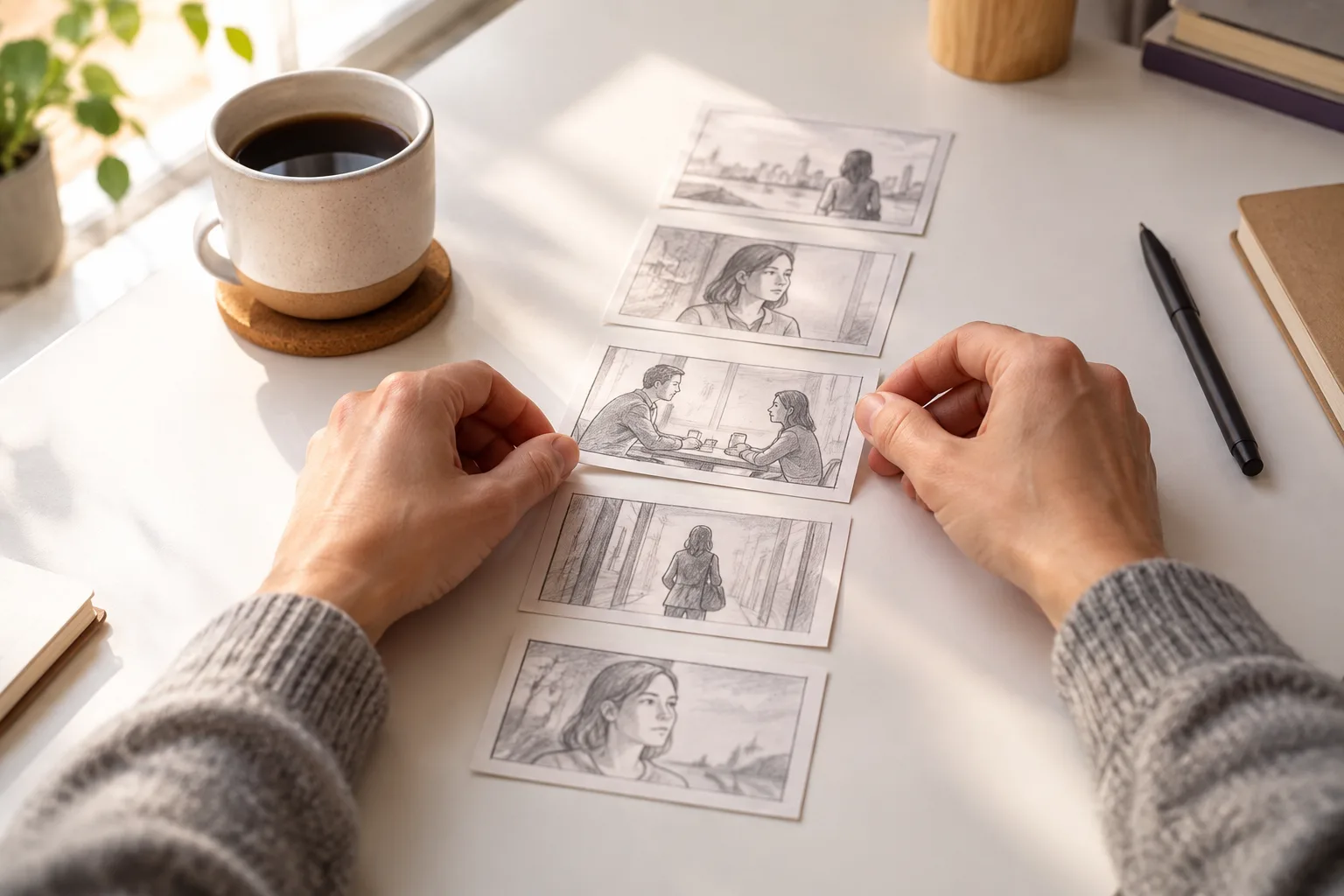
Many content teams try to apply the logic of a traditional series to a short format — and fail. The problem isn’t the length, but the structure. A thirty-minute episode is built around a setup, confrontation, and resolution. A three-minute episode is built around a single moment.
A working micro-drama structure looks something like this. The first five seconds are a visual and emotional hook: a conflict, paradox, or shock. Seconds 5–60 develop a single scene with one twist. Seconds 60–120 bring the climax and emotional peak. The final ten seconds are a cliffhanger that creates a need for the next episode.
This means a micro-drama script isn’t a condensed version of a regular series script. It’s a different document with different logic. Dialogue is minimal, exposition is built into the action, and each episode must work as a standalone unit, even if the viewer hasn’t seen the previous installments.
Localization: Adaptation, Not Just Translation
When micro-dramas cross borders, localization becomes not a final step, but a part of production planning. Subtitle translation is the simplest and least effective layer. True localization touches three levels.
The first is cultural references. Humor based on local realities doesn’t always translate. A joke that works in Bangkok might get no reaction in Jakarta. The team must decide in advance which elements to replace and which to keep with an explanation.
The second is pace and editing. Audiences in different regions react differently to the speed of plot development. In some markets, viewers are open to slower reveals; in others, they demand maximum density. This affects scene length and transition frequency.
The third is voice and sound. Dubbing for micro-dramas requires a special approach: the actor must fit the line into a tight timeframe while preserving the emotion. The original voice often becomes part of the series’ brand, and replacing it can alter the perception of the character.
The partnership between COL Group and CP Group in Thailand explicitly mentions using AIGC capabilities to optimize the localization pipeline. This isn’t a replacement for human adaptation, but a tool that speeds up routine stages — lip-syncing, generating dubbing variations, preliminary translation — and leaves creative decisions to the team.
The Production Pipeline: Pace Without Losing Quality
Micro-dramas demand a different production rhythm. A traditional animated series might release an episode a week. A micro-drama can release an episode a day, or even several episodes a day. This means the pipeline must be templated.
One practical approach is templating post-production. The team creates a set of presets for editing, color correction, sound design, and titling. Each episode goes through the same pipeline with minimal variations. This reduces time spent on routine tasks and allows creative energy to focus on the script and direction.
The creative producer becomes the bridge between the script and execution. They are responsible for ensuring each episode maintains a unified visual and emotional language, even if different artists or animators work on the series. Without this role, the pipeline quickly loses consistency, and the viewer feels the disconnect.
Monetization: Microtransactions and Subscriptions
The economics of micro-dramas rely on frequency, not payment size. The viewer pays a small amount for each episode or a bundle of episodes. The first episodes are usually free — that’s the hook. Then comes the paywall.
It’s important to understand that a paywall in micro-dramas works differently than traditional subscriptions. The viewer doesn’t subscribe for “access to all content.” They pay to continue a specific story. This means retention depends not on a library, but on the strength of each individual episode. If an episode is weak, the viewer leaves and doesn’t come back.
Telecom partners add another layer of monetization: bundling with mobile plans. The user gets access to micro-dramas as part of their communication package, which lowers the psychological barrier to payment and increases penetration.
What This Means for Content Teams Outside Asia
For content teams in other regions, the takeaways aren’t limited to “make short series.” The Asian model highlights several principles that work universally.
First, the format must match audience behavior, not the other way around. If viewers watch on the go, episodes must be short. If viewers are willing to pay to continue, monetization must be per-episode.
Second, distribution through local partners — telecoms, platforms, aggregators — is often more effective than going it alone. The partner brings the audience and payment infrastructure; the content team brings the product.
Third, localization isn’t a final step, but a part of production planning. Teams that bake adaptation into the scripting stage save weeks in post-production and get a product that actually works in a new market.
Fourth, templating production doesn’t mean lowering quality. It means routine operations are automated, and creative resources are directed at what truly distinguishes the series — the script, characters, and emotional beats.
Checklist: Launching a Vertical Micro-Drama in a New Market
- Define the target episode length and structure (hook, twist, cliffhanger) before writing the script.
- Map out cultural references and decide which elements need adaptation for each market.
- Template your post-production: presets for editing, color correction, sound, and titles.
- Appoint a creative producer responsible for consistency across episodes.
- Secure a distribution deal with a local partner — telecom, platform, or aggregator — before starting production.
- Test the first five episodes on a sample audience and measure retention and the transition rate to the next episode.
- Plan per-episode monetization: free first episodes, a paywall, and plan bundling where possible.
FAQ
How does a micro-drama differ from a regular short series?
A micro-drama isn’t just a short series, but a format built around mobile behavior: one conflict per episode, a hook in the first five seconds, and a cliffhanger at the end. A regular short series might keep the structure of a traditional episode, just in a condensed form.
Does every market need localization, or are subtitles enough?
Subtitles are enough for a test launch, but sustainable retention requires full adaptation: cultural references, editing pace, and dubbing. Subtitles are the first layer, not the final solution.
What role does a telecom play in micro-drama distribution?
A telecom partner brings an existing subscriber base, payment infrastructure, and the ability to bundle with mobile plans. This lowers the barrier for the first payment and expands reach without needing to build your own platform.
How many episodes are needed for a launch?
5–10 episodes are enough for a test. This is sufficient to measure retention, the transition rate to the next episode, and willingness to pay. If the metrics work, launch a full season.
Can automation be used in micro-drama production?
Yes, but with clear boundaries. Automation is effective for routine post-production stages, preliminary translation, and dubbing synchronization. The script, direction, and creative decisions remain with the team.