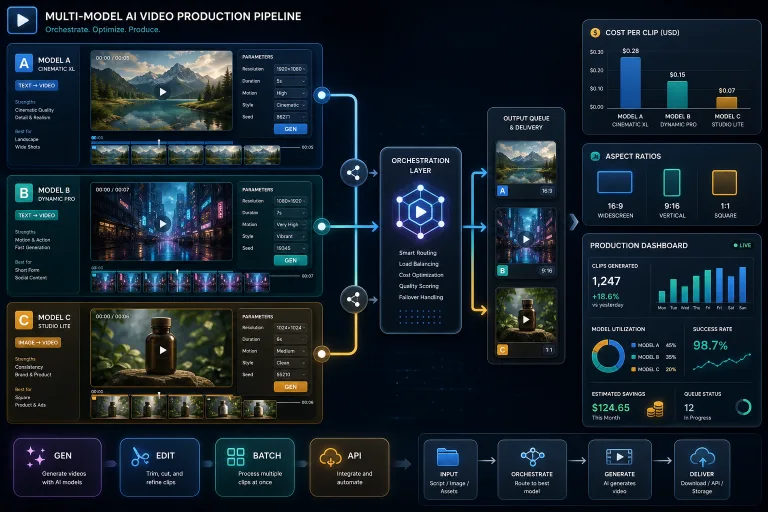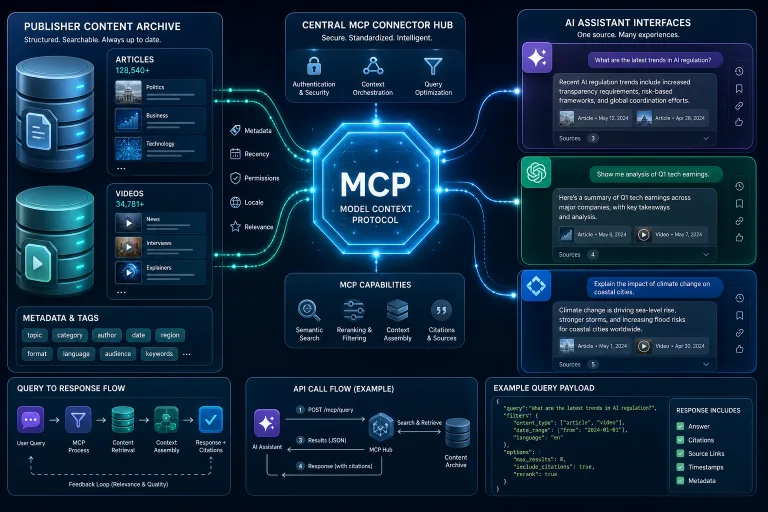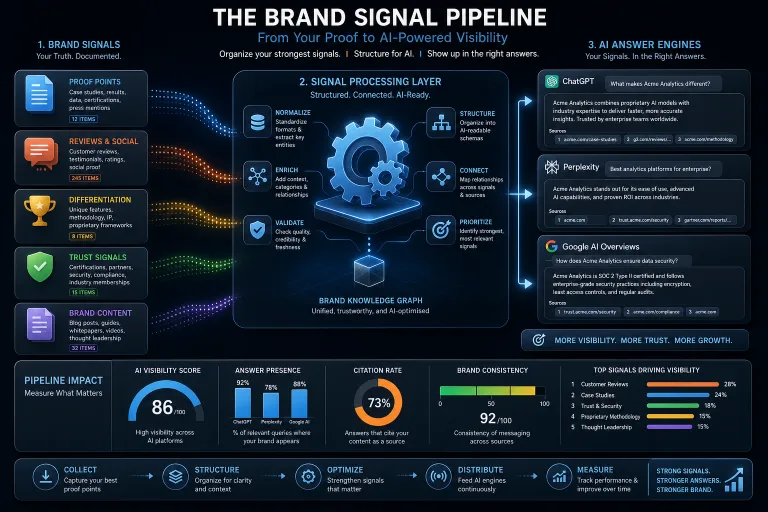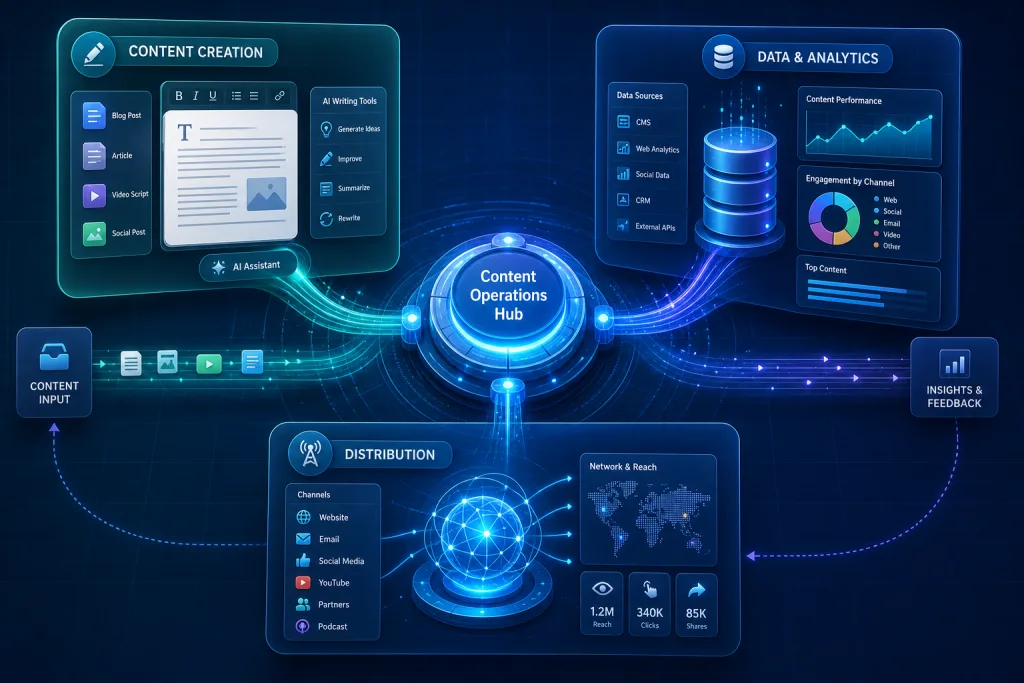
Everyone is investing in AI models. Teams are testing new tools, automating workflows, and scaling content volume. On paper, this should be the golden age of content productivity. But many editorial and content teams are experiencing the opposite effect: speed without a system creates noise, not progress. The reason is simple—today’s competitive advantage lies not in having the best AI model, but in having the best operating model that connects creation, data, and distribution into a single pipeline.
This thesis, voiced by Markus Noder from Serviceplan International in The Drum, accurately describes the problem content teams face: investing in AI tools without restructuring the operating model leads to fragmentation, duplication, and a loss of quality. The future belongs not to those who choose the most powerful model, but to those who build an integrated system where content creation, data management, and distribution work as a single mechanism.
What is a Content Operating Model
A content operating model is the architecture of processes, roles, tools, and data flows that determines how a content team produces, manages, and distributes content at scale. Unlike a content strategy, which answers the question “what and why we create,” the operating model answers “how we do it systematically and reproducibly.”
Key components of the operating model:
- Creation — processes for generating, editing, and fact-checking content using AI tools
- Data — collecting, storing, and utilizing metrics, sources, brand guidelines, and knowledge for content production
- Distribution — distribution channels, platform and search engine optimization, and measuring results
- Connectivity — integrating the three blocks above through shared metadata, APIs, and a unified content graph
When these blocks operate in isolation, each is optimized locally. Creation chases volume, data accumulates unused, and distribution receives no signal about quality. The result is content that is produced efficiently but doesn’t perform.
Why Speed Without a System Creates Noise
A typical scenario in content teams that have adopted AI without restructuring operations: five editors use five different AI tools with different prompts, each stores sources their own way, and no one knows which content performed best because analytics aren’t linked to the production pipeline. Volume grows, quality drops, metrics don’t align.
The problem is exacerbated by three factors:
-
Tool fragmentation. The team uses ChatGPT for drafts, Claude for editing, Midjourney for illustrations, NotebookLM for sources—without a unified coordination system. Each tool optimizes its own part, but no one optimizes the whole.
-
Disconnect between production and measurement. Content is created in one place, published in another, and measured in a third. There is no feedback loop: the editor doesn’t know which topics, formats, and structures perform best because data doesn’t return to the production cycle.
-
Lack of system memory. Every new content product starts from scratch. Brand guidelines, tone of voice, lessons from past articles, facts that have already been verified—all of this is not accumulated in an accessible form. AI tools operate without the context of the team’s previous experience.
Agentic Readiness: Preparedness for AI Agents
The next step after disparate AI tools is AI agents that can autonomously execute multi-step tasks: researching a topic, creating an outline, writing a draft, checking facts, optimizing for SEO, and publishing. But agents without an operating model aren’t efficient; they are chaos at speed.
Agentic readiness means that the team has:
- Structured data that an agent can read and use—machine-readable brand guidelines, glossaries, source databases, structure templates
- Clear boundaries of responsibility—what the agent does on its own, where a human-in-the-loop is needed, who approves the result
- Reproducible prompt systems—not one-off requests, but saved system prompts with context that yield predictable results
- Quality metrics at every stage—not just the final result, but intermediate checkpoints
Without these elements, an agent either reproduces the averaging effect we wrote about earlier, or creates content that fails fact-checking and doesn’t meet brand standards.
Architecture of an Integrated Content Pipeline
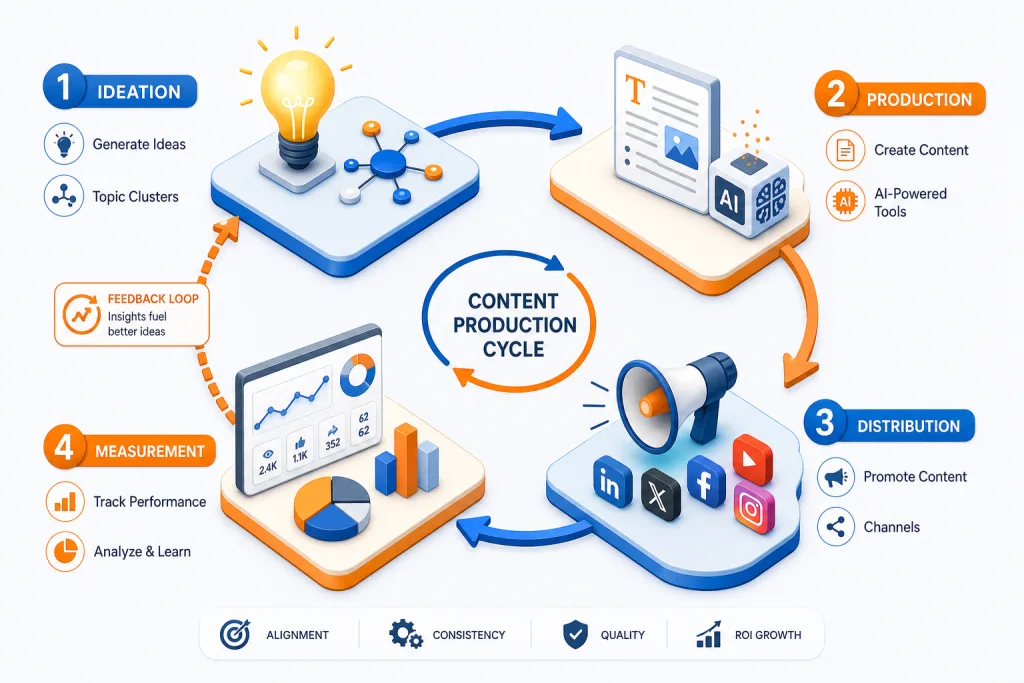
An integrated content pipeline is not a linear “wrote → published → measured” process, but a closed loop where every stage is connected to all others through shared data and metrics.
Level 1: Unified Content Graph
A content graph is a structured database that links every content product with its metadata: topic, format, target audience, keywords, sources, fact-checking status, publication date, and performance metrics. When new content is created, it automatically enters the graph. When metrics are updated, the graph updates. When the team plans new content, the graph suggests what already exists, what works, and what’s missing.
Level 2: Prompt System as Part of Operations
Prompts are not an editor’s personal skill, but an operational asset. Saved system prompts with brand context, target audience, and structural requirements must be versioned, tested, and iteratively improved. When a prompt yields a poor result, the problem isn’t the editor, but the prompt system—and that’s a systemic bug that needs fixing.
Level 3: Closed Feedback Loop
Content performance metrics—reach, engagement, conversions, visibility in AI search—must automatically return to the production cycle. If articles with a certain structure get more citations in AI answers, that’s a signal for editors. If a format with a specific type of source converts better, it should be incorporated into the template.
Practical Example: Restructuring Operations
Consider a hypothetical editorial team producing 40 long-form articles per month. Before the restructuring: 6 editors, each working in their own toolset, AI used for drafts, manual fact-checking, metrics reviewed once a quarter in Google Analytics, and no tracking of the connection between topics and results.
After restructuring the operating model:
- Unified prompt library with 12 templates for different content types (review, how-to, analytics, interview)—each template includes brand guidelines, structure, source requirements, and a fact-checking checklist
- Content graph in Notion or Airtable, where every article is linked to a topic, keywords, sources, and metrics
- Automated metric collection—once a week, a script pulls data from GA4, Search Console, and AI answer monitoring to update the content graph
- Role rotation—every month, each editor takes on the “analyst role,” studying metrics and proposing adjustments to prompt templates
Result after three months: not necessarily more content, but content that ranks better, is cited more often in AI answers, and requires fewer reworks.
Operational Maturity Metrics
How do you know your operating model is working? Not by content metrics, but by system metrics:
- Time from idea to publication—is it decreasing due to the system, rather than skipping stages
- Rework rate—how much content is returned for revision after the first review; a low rate means the prompt system and templates are working
- Metric connectivity—what percentage of published content has linked performance metrics in the content graph
- Reproducibility—can a new editor enter the system and produce quality content using existing templates and prompts
- Knowledge utilization—what percentage of sources, facts, and data from previous articles are reused in new materials through the shared database
Risks and Limitations
Restructuring an operating model is not a quick process. The main risks are:
- Team resistance—editors are used to their tools and workflows; unification is perceived as a loss of freedom. Solution: introduce the system in phases, showing that standardizing routine parts frees up time for creative tasks.
- Over-engineering—trying to build the perfect system on the first try instead of iterating. Start with a content graph and a basic prompt library, adding integrations as needed.
- Tool chauvinism—the belief that changing the tool will solve the problem. The problem isn’t the tool, but the lack of connections between stages. A new tool without an operating model will just add another isolated node.
- Ignoring distribution—many teams optimize creation but forget that without integration with distribution and measurement channels, the result is invisible. Content that no one saw isn’t content; it’s a warehouse.
Connection to AI Search and Answer Engines
The operating model directly impacts content visibility in AI search. ChatGPT, Perplexity, and Gemini cite content that is structured, has clear metadata, and is linked to authoritative sources. If your content graph stores structured data about every article—topic, key entities, sources, update date—these are the exact data points AI engines need for citation.
Teams with an integrated operating model get a dual advantage: their content is easier for both AI engines and traditional search to discover, because metadata and structure are built into the production process, not added as an afterthought.
Checklist: Assessing Your Content Team’s Operational Maturity
- You have a unified prompt library with templates for each content type, accessible to all editors
- Every content product is linked to metadata in a shared database (topic, keywords, sources, status)
- Performance metrics automatically return to the content graph and are available to editors
- A new editor can produce quality content using existing templates without verbal training
- Prompts and templates are reviewed at least once a month based on metrics and feedback
- The stages of creation, fact-checking, and distribution are linked by shared data, rather than duplicated in different systems
Conclusion
The market for AI content tools is oversaturated. Every week brings a new model, a new assistant, a new plugin. But tools are nodes, not a system. The competitive advantage for content teams in 2026 is not picking the best node, but building the best network that connects them. The content operating model is that network. Without it, you aren’t slower than your competitors—you’re just moving faster in the wrong direction.
FAQ
How does a content operating model differ from a content strategy?
A content strategy defines what and why you create—topics, audiences, goals. An operating model defines how you do it systematically—processes, tools, data flows, roles, and metrics. A strategy without an operating model doesn’t scale; an operating model without a strategy has no direction.
Where do you start restructuring the operating model if the team is already using AI?
Start with a content graph—a unified database where every content product is linked to metadata and metrics. Then standardize prompt templates for each content type. The third step is to set up an automatic return of metrics to the content graph. Don’t try to build everything at once—iterate.
Do you need expensive tools for an integrated pipeline?
No. A content graph can be built in Airtable or Notion, a prompt library in Google Docs with versioning, and metric collection through scripts and APIs. The key is the connectivity of systems, not the cost of individual tools. An expensive tool without an operating model won’t solve the fragmentation problem.
How does the operating model affect visibility in AI search?
AI engines cite content with a clear structure and metadata. If your operating model embeds structured data into the production process—topics, entities, sources, update dates—these are the exact signals Perplexity and Gemini need for citation. Teams with an integrated model gain a discoverability advantage automatically.
What is agentic readiness and why does an editorial team need it?
Agentic readiness is a team’s preparedness to use AI agents that autonomously execute multi-step tasks. It requires structured data, clear boundaries of responsibility, reproducible prompt systems, and metrics at every stage. Without this readiness, agents don’t increase efficiency; they just accelerate chaos.